


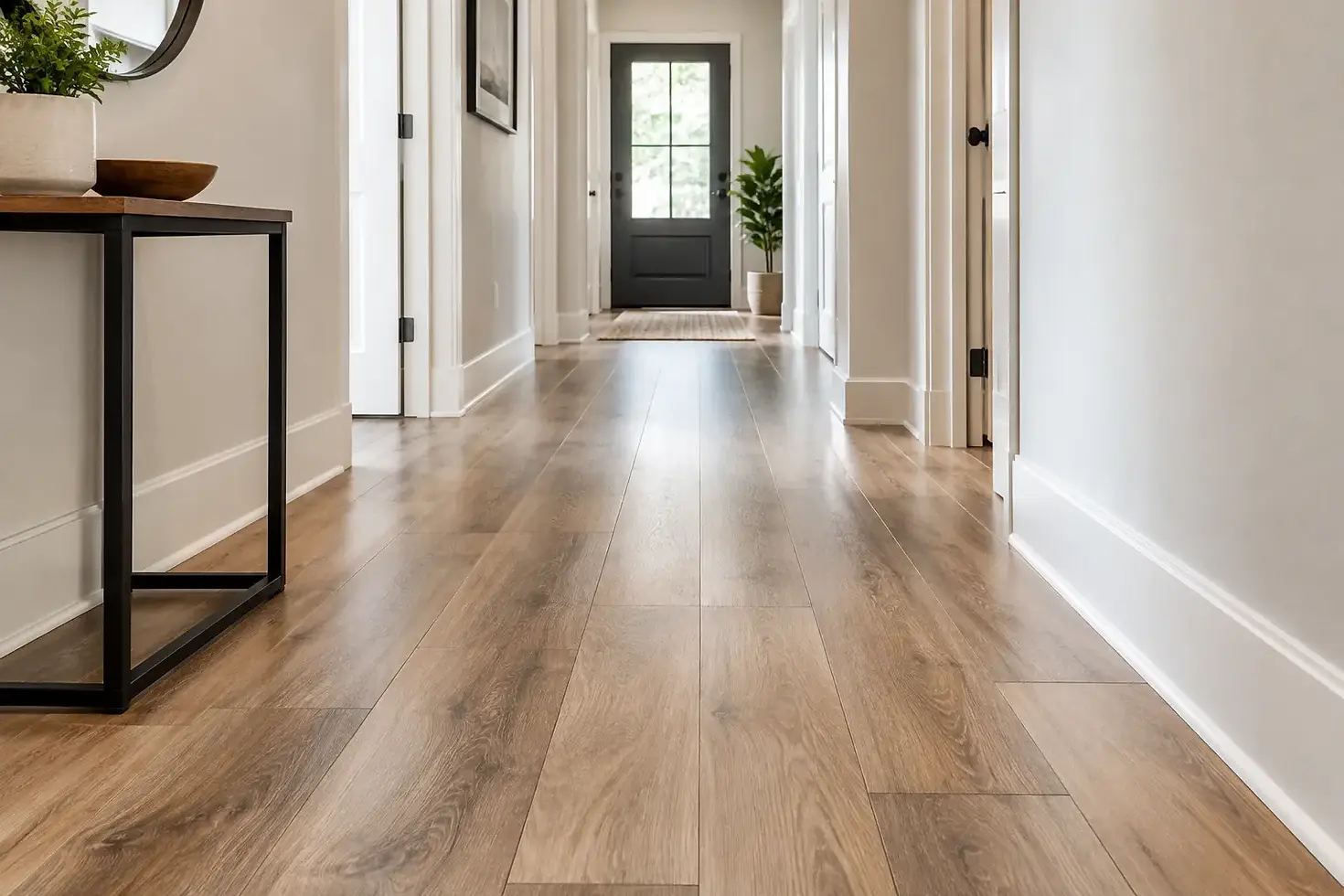
Laminate Flooring for Hallways That Lasts

A hallway does more work than most rooms in the home. It handles school bags, shoes, pets, visitors, shopping bags and the daily traffic between every other space. That is why laminate flooring for hallways needs to offer more than a good first impression. It should be hard-wearing, easy to maintain and installed with enough care to stay looking straight and stable for years.
For many South Australian homes, laminate is a practical way to achieve a timber-look hallway without the cost and ongoing maintenance of solid timber. The key is choosing a quality product, a suitable finish and an installation approach that accounts for the condition of the subfloor underneath.
Is Laminate Flooring for Hallways a Good Choice?
Laminate can be an excellent choice for a hallway, particularly where homeowners want a polished timber appearance with strong everyday durability. Quality laminate flooring has a tough wear layer designed to resist the scuffs, scratches and minor impacts that can quickly show up in high-use areas.
A hallway is also highly visible. It is often the first interior area guests see, and it usually connects living rooms, bedrooms and entry spaces. Using one consistent flooring style through these areas can make the home feel more open and considered. Long-plank laminate can create a clean, modern look while giving older homes a welcome visual lift.
However, not every laminate product is suited to every hallway. If the hallway leads directly from an external door and regularly receives wet shoes, rain or beach sand, water resistance matters. Standard laminate should not be treated as fully waterproof. Spills and moisture need to be cleaned promptly, especially around joins and external entries. In homes with a particularly exposed front door, hybrid flooring may be the more suitable option.
The best choice depends on how the space is used, where it sits in the home and how well the entry is protected from the weather.
What Makes a Hallway Laminate Floor Last?
A hallway floor needs to cope with concentrated foot traffic. Unlike an open-plan living area where people spread out, the same narrow path is walked over repeatedly. Product quality and installation details both make a real difference here.
Choose a durable wear layer
Look for laminate designed for busy residential use, with a strong abrasion rating and a reputable manufacturer warranty. The wear layer is the protective surface that helps the boards stand up to shoes, pet claws, furniture movement and everyday use.
It is tempting to select flooring by colour alone, but a lower-grade product may show wear sooner in a main passageway. A quality laminate does not have to be the most expensive option in the range. It does need to suit the demands of the household. A quiet couple in a low-traffic home may have different requirements from a family with children, a dog and regular visitors.
Consider moisture at the entry
Hallways near the front or back door need a little more planning. A good doormat outside and another inside will reduce grit and moisture before they reach the floor. This small step protects the finish and helps prevent dirt being carried through the rest of the house.
Where there is a genuine risk of frequent wet footwear, choosing a water-resistant laminate is sensible. Even then, it is best to wipe up standing water rather than leaving it to sit. Waterproof performance varies between products, and correct installation is still essential to protect the joins and perimeter edges.
Select a finish that suits daily life
Texture and colour have a practical role, not just a design role. Very dark flooring can look striking, but it may show dust, pet hair and light scuff marks more readily in a bright hallway. Very pale boards can be equally demanding if the family spends a lot of time coming in from the garden or footpath.
Mid-tone oak looks, natural timber variation and low-sheen finishes are popular for good reason. They bring warmth to the home while being more forgiving of normal day-to-day dust. Embossed or textured finishes can also provide a more realistic timber feel and help disguise small marks.
Getting the Plank Direction Right
The direction of the boards has a major effect in a narrow hallway. In most cases, installing planks along the length of the hall makes the space feel longer and more connected. It creates a natural line of sight towards adjoining rooms and avoids chopping the area into short visual sections.
That said, the layout should be considered alongside the flooring in connected rooms. A continuous floor generally looks best when the plank direction works across the larger living space as well. Doorways, natural light and the shape of the floorplan can all influence the final decision.
Good planning also reduces awkward narrow cuts along walls. An experienced installer will measure the space and set out the first rows carefully, rather than simply starting against the nearest wall. These details are easy to overlook at the beginning but are very noticeable once the floor is complete.
Subfloor Preparation Is Not Optional
A quality laminate floor can only perform as well as the surface below it. Hallways in established homes may have uneven concrete, old adhesive residue, timber subfloors with movement or slight height changes between rooms. Covering these issues without proper preparation can lead to a hollow sound underfoot, movement in the boards, visible joins or premature damage.
Before installation, the subfloor should be checked for flatness, moisture and stability. Concrete may require grinding, patching or levelling compound to create a suitable base. Timber subfloors may need loose sections secured or uneven areas corrected. The appropriate underlay is then selected to suit the flooring system and subfloor type.
Expansion space around walls, door jambs and fixed objects is equally important. Laminate flooring is designed to move slightly as temperatures and indoor conditions change. It should not be tightly trapped beneath skirting, cabinetry or door frames. Allowing for this movement helps prevent lifting, peaking and unnecessary stress on the boards.
This is where professional workmanship adds value. A hallway may seem like a small area, but it often has several doorways, transitions and visible finishing points. Clean cuts, well-fitted trims and properly finished thresholds give the floor the finished appearance homeowners expect.
Matching Hallway Flooring With the Rest of the Home
Using laminate in the hallway does not mean every room needs the same product. Many homes use laminate through hallways, bedrooms and living areas, then choose hybrid flooring in wet-prone spaces such as kitchens, laundries or entry zones. Others carry the same timber-look colour through the home in different product types for a more consistent visual result.
The transition between surfaces should be planned rather than treated as an afterthought. A neat, low-profile transition can make a change in flooring feel intentional and help accommodate different floor heights. This is especially relevant in renovations, where new flooring may meet existing tiles, carpet or timber.
If stairs connect to the hallway, matching stair nosing and careful finishing can make the whole area feel cohesive. It is one of those details that lifts the result from a basic flooring replacement to a well-resolved renovation.
Simple Care for a Better-Looking Floor
Laminate is popular because it is relatively low maintenance. Regular vacuuming with a hard-floor setting or sweeping with a soft broom removes grit that can act like sandpaper under shoes. For routine cleaning, use a lightly damp microfibre mop and a cleaner approved for laminate flooring.
Avoid soaking the floor, steam mops and harsh cleaning products. Excess moisture can work into joins, while abrasive products may dull the protective surface. Felt pads under furniture and a quality mat near external doors are straightforward ways to reduce wear in the busiest parts of the hallway.
For families, the practical advantage is clear: a well-chosen laminate floor can handle normal living without needing constant attention. It still benefits from sensible care, but it does not demand the maintenance routine associated with many natural timber finishes.
When Another Flooring Type May Suit Better
Laminate is a strong option for many internal hallways, but it is not automatically the right answer for every home. If the hallway is directly exposed to heavy moisture, connects to an uncovered entry or is part of a commercial setting with very high foot traffic, hybrid flooring may provide greater water resistance.
Engineered timber is worth considering when the priority is the authentic depth and character of real timber. It comes at a higher price point and needs the right environment, but it can deliver a premium finish in a carefully maintained home. For homeowners focused on value, durability and a convincing timber look, laminate remains a very capable middle ground.
The right hallway floor should suit the way your household actually moves through the home. With a durable laminate, thoughtful colour selection and proper subfloor preparation, the busiest stretch of flooring can become one of the most polished parts of the house.


Comments