


Laminate Flooring vs Hybrid Flooring
When clients ask about laminate flooring vs hybrid flooring, they are usually not chasing a textbook definition. They want to know which one will handle kids, pets, spills, furniture, daily traffic and still look sharp in five or ten years. That is the real question, and the answer depends on how you live, where the flooring is going, and how well the floor is installed from the ground up.
Both options are popular for good reason. They give you the look of timber without the price tag or maintenance that often comes with solid hardwood. They are also easier to live with in busy homes. But they are not interchangeable, and choosing the wrong one for the space can be an expensive frustration.
Laminate flooring vs hybrid flooring: what is the difference?
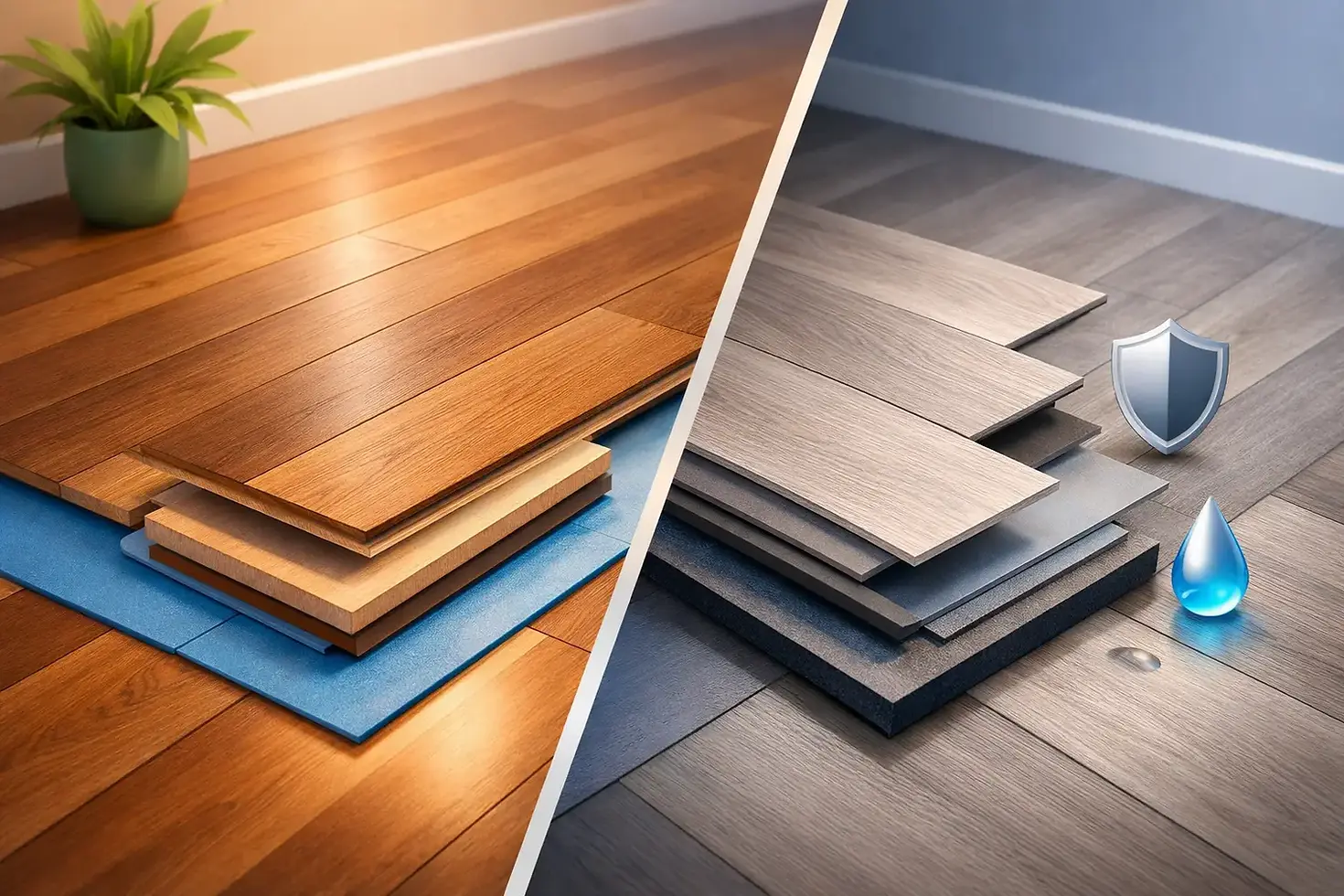
Laminate flooring is built with a dense fibreboard core, a printed decorative layer that creates the timber look, and a protective wear layer on top. It is known for its scratch resistance, realistic timber visuals and strong value for money. Modern laminate has come a long way, and the better ranges feel more refined underfoot than many people expect.
Hybrid flooring combines the features of laminate and vinyl. It usually has a rigid core, often made from stone polymer composite or similar materials, along with a durable top layer and waterproof construction. In practical terms, hybrid is designed to cope better with moisture while still giving you a timber-style finish.
That core construction is where the biggest difference starts. Laminate generally performs best in dry internal areas. Hybrid gives you more flexibility in spaces where water, splashes and humidity are part of daily life.
Where laminate makes more sense
Laminate is often the better fit when you want a hard-wearing floor for living rooms, bedrooms, hallways and study areas, especially if budget matters. It offers excellent visual value. If you are aiming for a premium timber look without stepping into engineered timber pricing, laminate can be a smart middle ground.
It is also a strong choice for families who want a floor that resists scratches from chairs, toys and general wear. In many homes, the appeal of laminate is simple - it looks good, feels solid, and delivers reliable performance in the right setting.
The catch is water. While some laminate products offer improved moisture resistance, laminate is not usually the first recommendation for wet areas or zones where spills are frequent and likely to sit unnoticed. A dropped drink wiped up quickly is one thing. Ongoing exposure around bathrooms, laundries or kitchen-heavy households is another.
Underfoot, laminate can feel firmer and slightly louder than hybrid depending on the subfloor and underlay. That does not make it a poor option, but it is worth knowing if comfort and acoustics are high on your list.
Where hybrid flooring has the edge
Hybrid flooring tends to win people over when they need greater water resistance. Kitchens, entryways, laundries and homes with pets often suit hybrid well because it is built for conditions that are less forgiving. If you have children running in from the backyard, wet shoes at the door, or a household where spills are just part of the day, hybrid usually provides more peace of mind.
It can also be a practical option across open-plan areas where you want one flooring type flowing through multiple rooms, including places where laminate might be less suitable. That continuity matters in modern homes. It creates a cleaner finish and can make the whole space feel larger and more considered.
Hybrid often has a slightly softer and quieter feel underfoot too. That can be appealing in family homes, upstairs areas and renovations where sound transfer is a concern. Not every product will feel the same, but many homeowners notice the difference.
Cost, value and the long-term view
When comparing laminate flooring vs hybrid flooring, price is always part of the conversation. Laminate is often the more affordable product upfront, which makes it attractive for larger homes, investment properties or renovations where every budget decision counts.
Hybrid usually costs more, but the added water resistance may justify it if you are fitting out spaces that see regular moisture. Paying less at the start does not always mean better value if the flooring is not suited to the room.
The smarter way to look at cost is by matching the product to the use. A well-chosen laminate floor in a dry living area can offer outstanding value. A well-chosen hybrid floor in a kitchen or busy family zone can save headaches later. Good flooring decisions are not just about the price per square metre. They are about performance over time.
Appearance and style: is one better looking?
This is where people are often surprised. Both laminate and hybrid flooring come in a wide range of timber-look finishes, from light coastal tones to rich oak-inspired colours and deeper contemporary shades. Neither category automatically looks better than the other.
What matters more is the quality of the board, the realism of the texture, the plank size, and how well the colour suits your home. A cheap product in either category will usually look like a cheap product. A well-made product, professionally installed, can lift the entire room.
Laminate has long been known for strong decorative detail and sharp timber visuals. Hybrid has improved rapidly and now offers excellent design options as well. For many homeowners, the final choice comes down less to appearance and more to where the floor needs to perform.
Installation matters more than many people realise
Even the best flooring product can disappoint if the installation is rushed or the subfloor is not prepared properly. This is one of the biggest reasons flooring comparisons can be misleading. People compare products, but they do not always compare the conditions those products are being installed over.
If the subfloor is uneven, damp, or poorly prepared, the result can be movement underfoot, visible imperfections, noise, or reduced product lifespan. Floor levelling, moisture checks, concrete grinding and proper preparation are not optional extras when quality matters. They are part of the job.
That is especially relevant in South Australian homes, where subfloor conditions can vary widely between older renovations and new builds. A product that is technically suitable still needs the right foundation. That is why professional guidance can save money in the long run - not by pushing the most expensive option, but by making sure the floor is appropriate for the space and installed correctly.
Which floor is better for Australian homes?
There is no single winner for every household. For many Australian homes, hybrid flooring has the broader range of use because of its waterproof performance and versatility in busy areas. That makes it appealing for families, pet owners and anyone wanting fewer worries around moisture.
Laminate still has a very strong place, particularly in dry living spaces where durability, appearance and budget are the priority. In the right room, it can be a fantastic result. It is not an outdated option or a second-best compromise. It simply needs to be matched to the environment.
If your project includes bedrooms, living areas and a home office, laminate may be all you need. If it includes kitchens, entrances, laundries or a more spill-prone lifestyle, hybrid may be the safer call. Some homeowners even use a mix across different zones, depending on the layout and the finish they want.
Laminate flooring vs hybrid flooring for your renovation
For renovations, the decision often comes down to balancing appearance, practicality and what is happening underneath the old floor. If you are replacing tired carpets or outdated tiles, this is the time to think beyond the surface. How level is the subfloor? Are there moisture concerns? Do you want the same flooring through most of the home? Will the new floor need to work with stairs or transitions between rooms?
Those details shape the best choice far more than a quick product comparison online. A growing family, a downsizer planning for easier maintenance, and an investor preparing a rental property may all make different decisions for good reasons.
At Thinking Flooring, this is usually where the conversation becomes clearer. Once the room use, subfloor condition and finish goals are understood, the right option tends to stand out.
The best flooring choice is the one that still feels like the right decision after the furniture is back in place and real life starts happening on it. If you want a floor that looks polished, handles day-to-day living and suits the way your home actually works, the right answer is rarely the trendiest one - it is the one matched properly to the space.


Comments